Stainless Steel 316L Rings: The Volume Fashion Workhorse for Jewellery Brands
316L rings for volume fashion programs: why the grade matters vs 304, tarnish and skin answers, resizing reality, designs that scale and supplier questions.
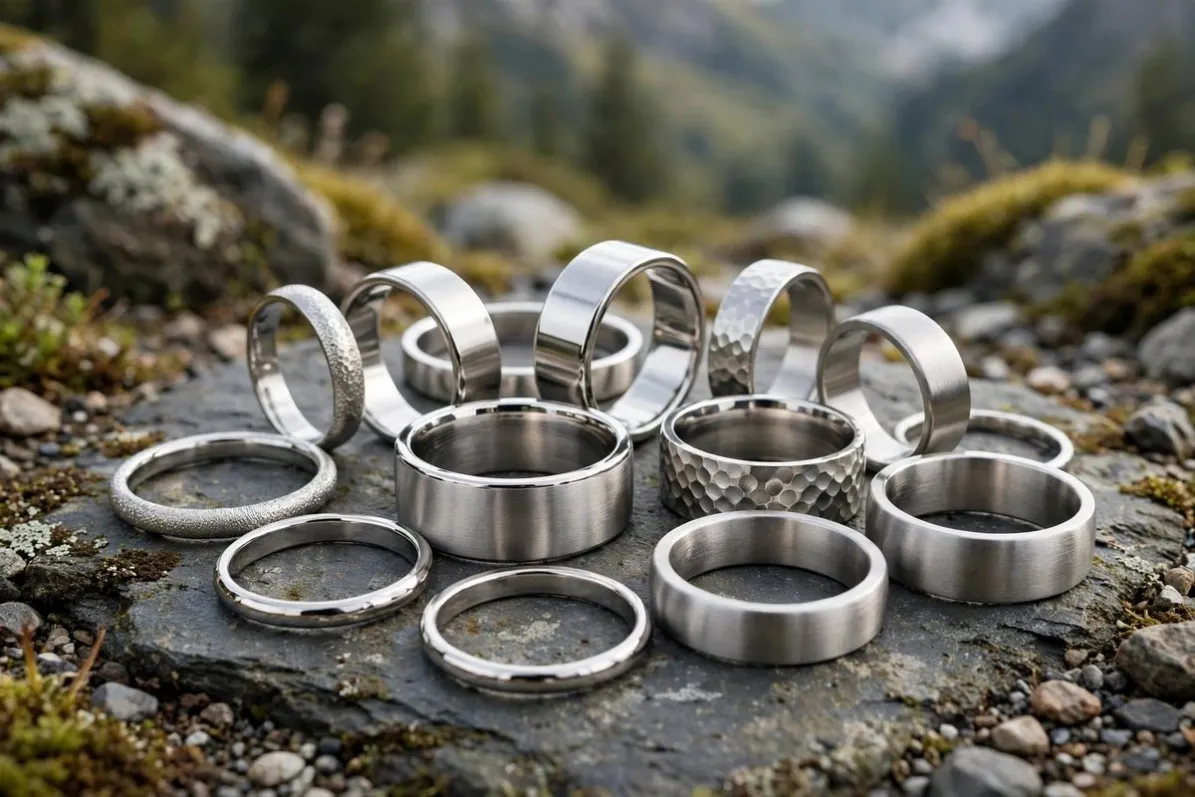
Stainless Steel 316L Rings: The Volume Fashion Workhorse for Jewellery Brands
Quick answer: Stainless steel 316L is the material behind most high-volume fashion ring programs: the low-carbon surgical grade used in watches and medical instruments, with higher corrosion resistance and lower nickel release than the 304 grade of household goods. It will not tarnish or turn skin green — discolouration complaints in this category trace to plating layers, not the base metal — and it can be re-polished after wear, which few volume materials allow. It cannot be resized, so programs run confirmed size runs with size exchange. Stacking sets, men's bands, spinner rings and faceted designs all run on the one grade, in mirror, satin, brushed and PVD-style coated finishes. When a factory quotes "stainless steel" without a grade, ask for 316L explicitly — in writing.
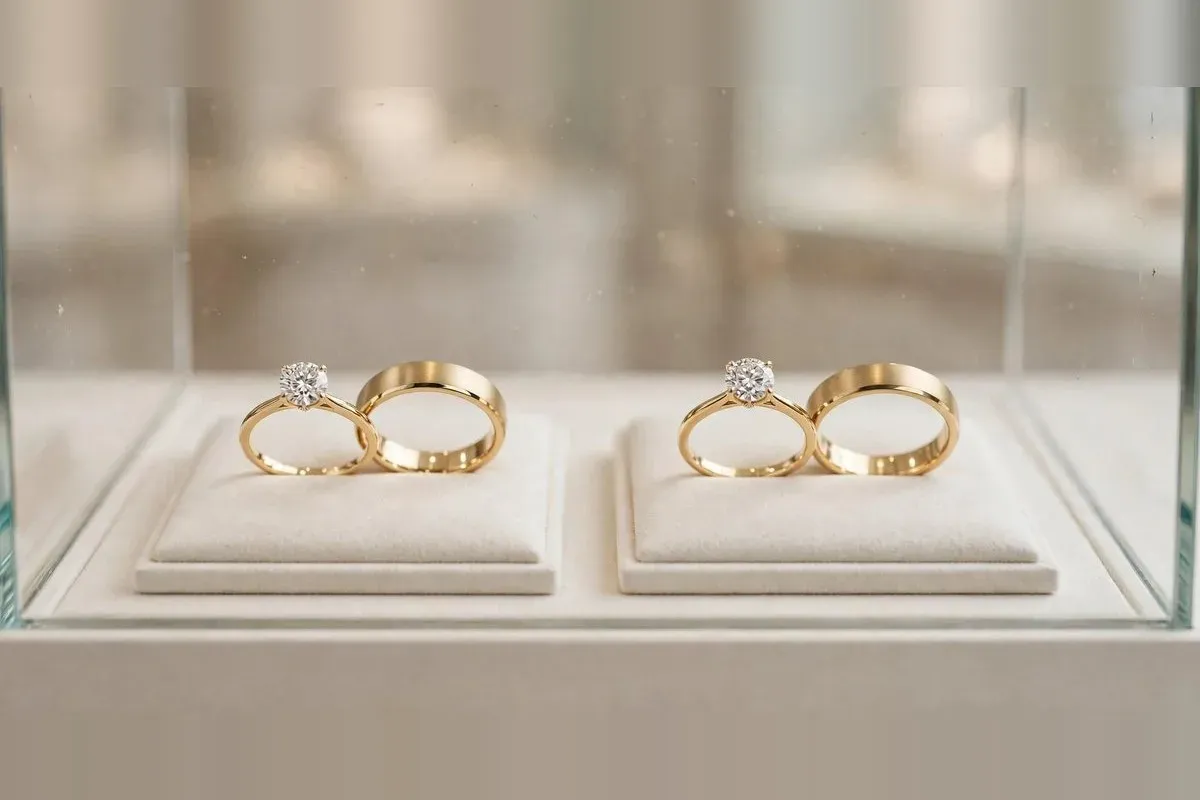
Figure 1 — The workhorse at work: consistency is the aesthetic. Image: 1200 × 800 px.
Stainless steel 316L is the material behind most high-volume fashion ring programs: surgical-grade, low nickel release, consistently finishable at scale, and re-polishable after wear. For brands planning large runs — stacking sets, men's lines, single-size programs — 316L is the grade that balances skin safety, durability and unit economics. This guide covers what brands ask before committing; the manufacturing itself is told stage by stage in How 316L Stainless Steel Rings Are Made.
On this page:
- Why 316L and not just "stainless steel"?
- 316L at a glance
- Will 316L rings tarnish or turn skin green?
- Care: the re-polishable volume metal
- What designs work in volume 316L programs?
- What brands should ask a 316L supplier
- Frequently asked questions
Why 316L and Not Just "Stainless Steel"?
"Stainless steel" is not a specification — the grade is. 316L is the low-carbon surgical grade used in watches and medical instruments. Compared with the 304 grade common in household goods, 316L offers higher corrosion resistance and lower nickel release — the difference between a ring that stays skin-safe through daily wear and one that may not.
When a factory quotes "stainless steel" without a grade, ask for 316L explicitly. The grade determines skin safety, finish quality, and how the ring ages.
This is the simplest sentence in the category to write and the most expensive to skip: every downstream claim in this guide — the tarnish answer, the skin answer, the re-polish promise — is a property of the grade, and a program built on ungraded steel has quietly opted out of all of them.
316L at a Glance
| Property | 316L stainless steel — what brands can rely on |
|---|---|
| Grade | Low-carbon surgical grade; certified bar stock with documentation |
| Corrosion | Highly resistant in daily wear, water and sweat; no tarnish |
| Nickel | Present in the alloy, tightly bound; release in normal wear is minimal |
| Skin | Accepted for surgical and piercing use; confirmed nickel allergy routes to pure titanium |
| Hardness | Hard enough for crisp detail and daily wear; softer than cobalt chrome and tungsten carbide |
| Finishes | Mirror, satin, brush, textures; black and gold-tone PVD-style coatings; colour-fill |
| Re-polishing | Yes — surfaces refresh after wear, a rarity among volume materials |
| Resizing | Cannot be resized — confirmed size runs, size exchange |
| Emergency removal | Cut with standard ring cutters (slower than precious metals) |
| Weight | Solid mid-weight — substantial without tungsten's heft |
| Program role | The volume fashion workhorse: stacking, men's, spinner, inlay host, entry wedding lines |
Will 316L Rings Tarnish or Turn Skin Green?
This is the most-asked question from buyers, and the honest answer: 316L is highly resistant. It contains a small amount of nickel, but bound in the alloy so tightly that release in normal wear is minimal — which is why 316L is accepted for piercings and surgical use. It does not tarnish, and it does not turn skin green (green marks are a copper-alloy story, from brass and bronze worn bare). Discolouration issues in steel programs typically come from plating layers, not the base metal — which is why coated designs carry the coating honesty of the process article, while bare 316L carries none of it.
For EU sales, nickel release from prolonged skin contact is regulated under REACH — brands should confirm any supplier's material compliance approach before ordering, in the scoped way the brass guide sets out: what was tested, on what, against which standard.
Care: The Re-Polishable Volume Metal
316L asks for almost nothing in wear — water, sweat and daily life are its home conditions, and a wash with soap returns it. Its one distinctive asset appears after wear: steel surfaces can be re-polished, so a ring dulled by years of contact can be refreshed rather than retired — a property programs can honestly build after-sales language on, and one the harder exotic metals (which keep their finish by never yielding) match differently. Coated variants follow coating rules instead: the colour is a surface, and care protects the surface, not the steel beneath it.
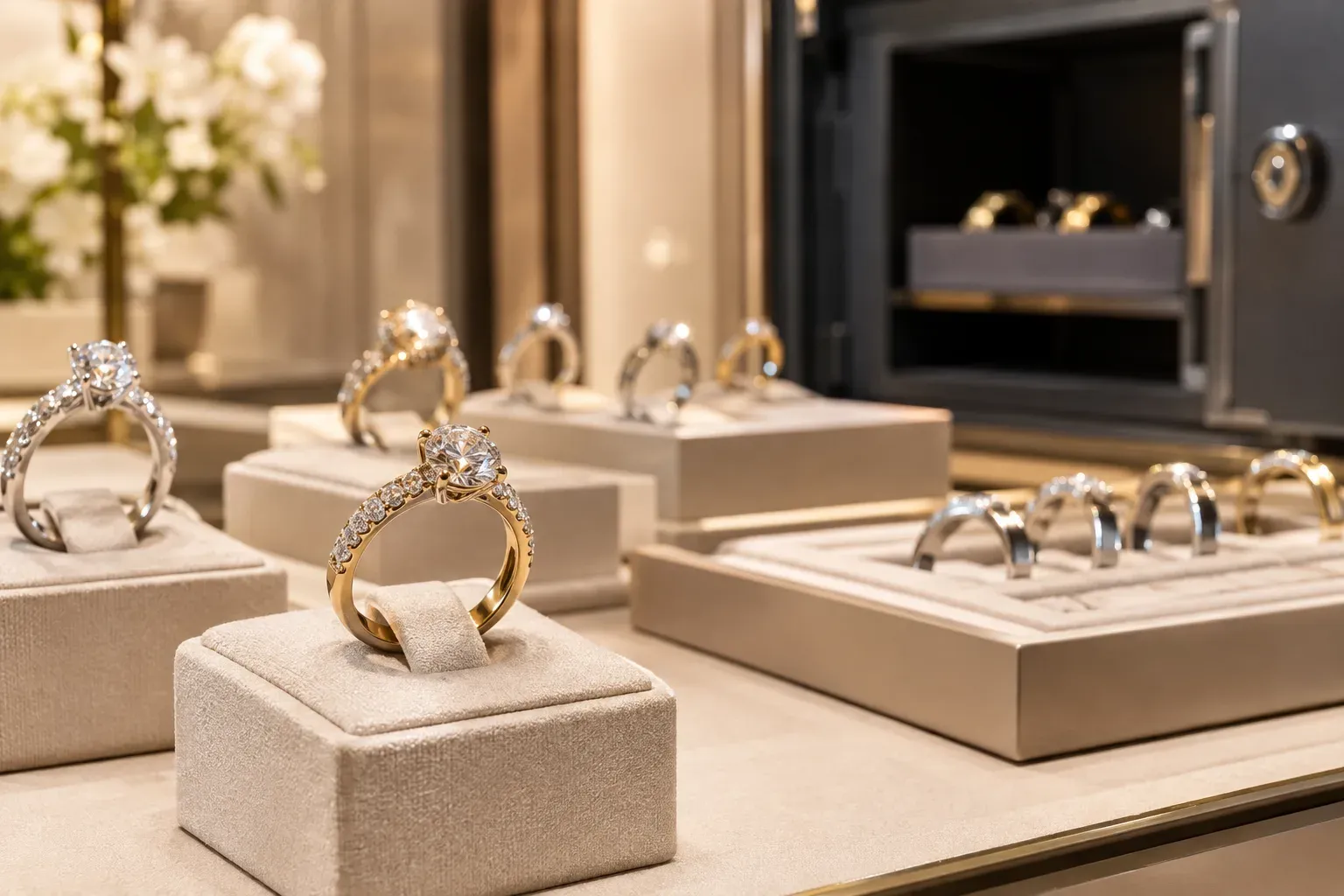
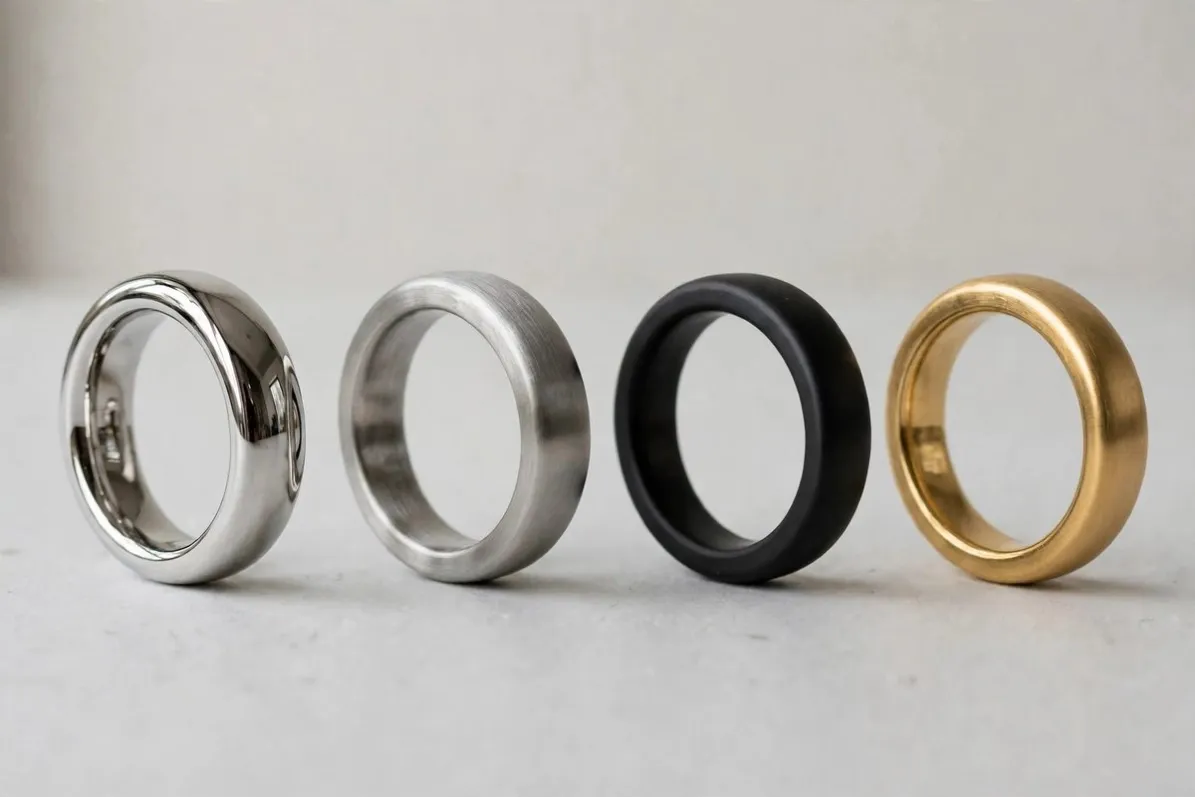 Figure 2 — Finishes are the collection: the grade stays constant while the looks multiply. Image: 1200 × 800 px.
What Designs Work in Volume 316L Programs?
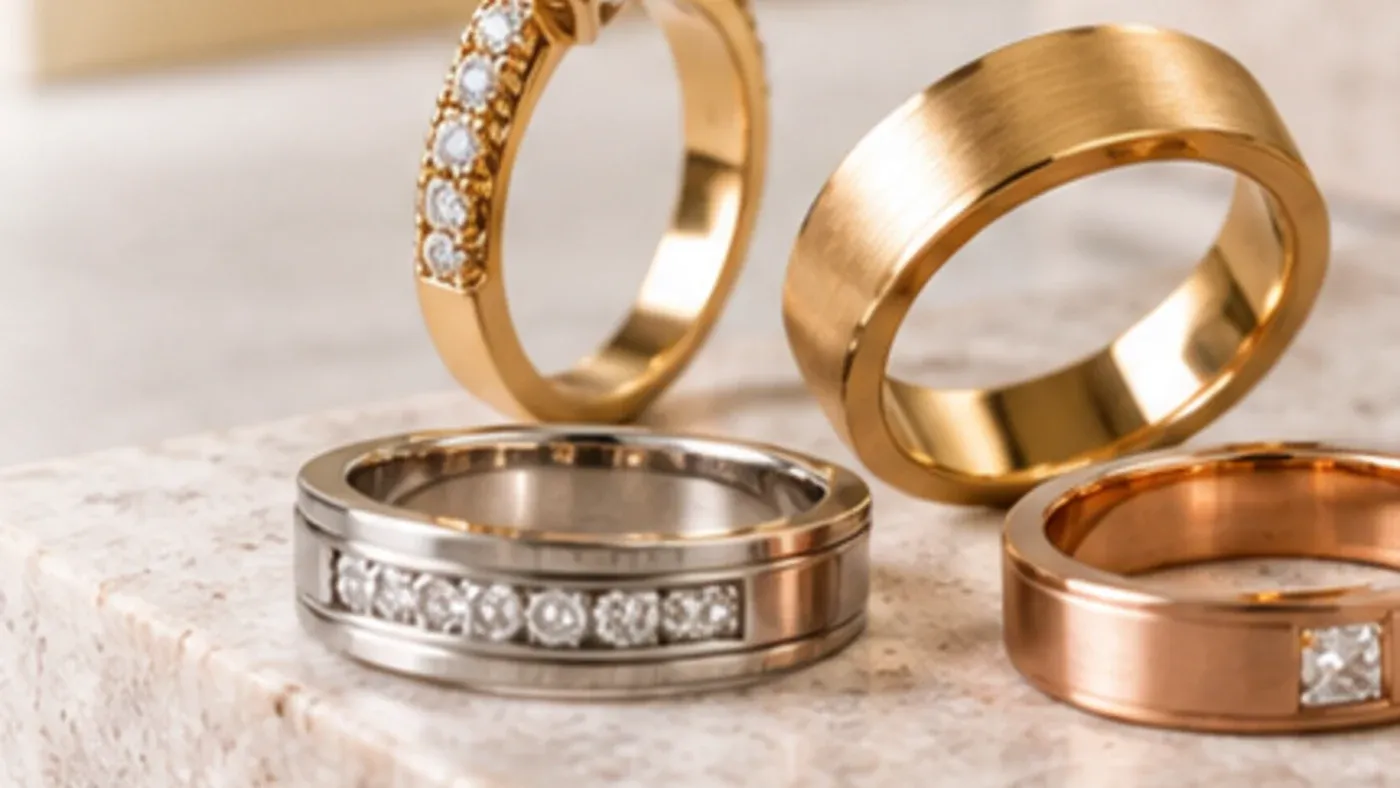
- Stacking sets — mixed widths and textures that retail as configurable bundles; slim bands are where grade consistency shows, because a stack is compared against itself daily.
- Men's bands — brushed, polished and two-tone finishes; the category's default band, at every width.
- Spinner rings — rotating outer bands over a 316L base; the clearance is a machining discipline, cut at the detail stage of the process.
- Faceted designs — the sculptural faceted look, executed in 316L for a lighter ring and a more flexible cost structure than the ultra-hard alternatives.
Surface options — mirror polish, satin, brushing, black or gold PVD-style coatings, colour-fill — all run on the same base grade, letting one material carry an entire collection: one supply chain, one quality language, many shelves of product.
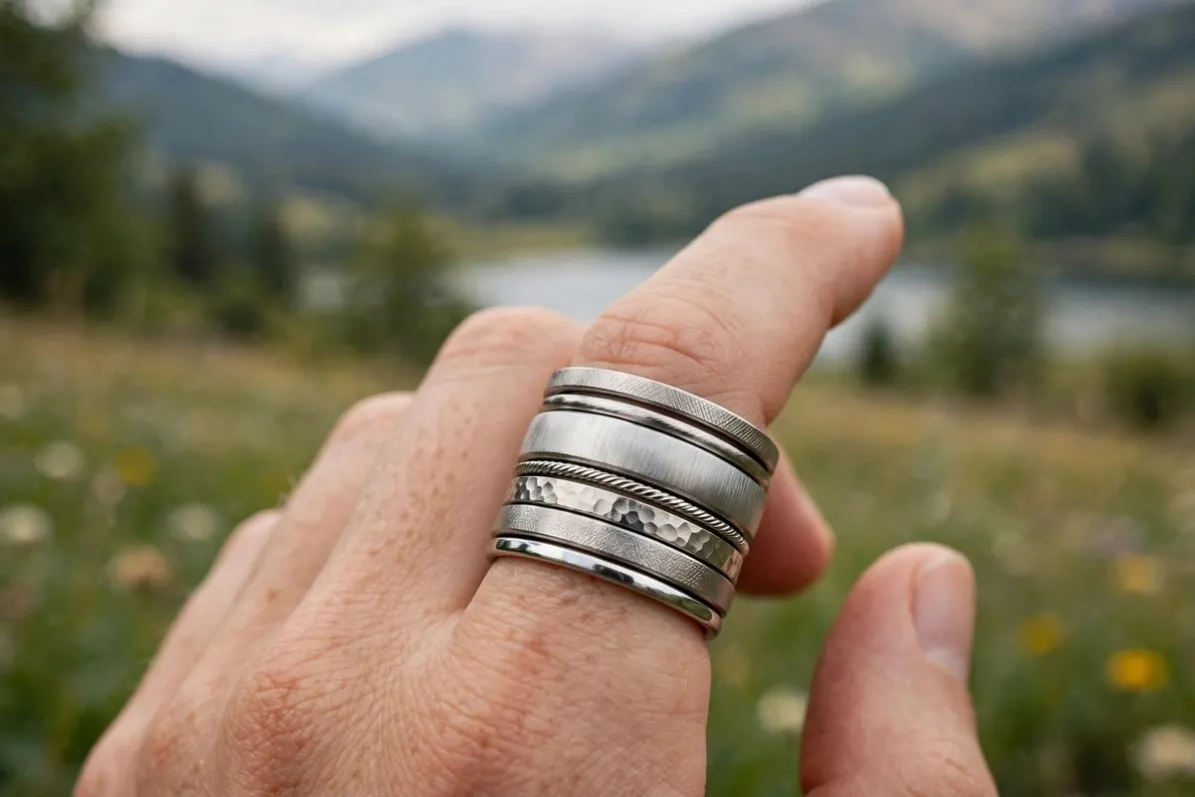 Figure 3 — The stack is the strictest consistency test in the category, and the grade passes it by construction. Image: 1200 × 800 px.
What Brands Should Ask a 316L Supplier
| Question | What the answer tells you |
|---|---|
| Is it 316L — stated in writing? | Whether skin-safety claims are real |
| Machined or cast — and how is finish checked? | Whether sizes and surfaces will hold across the run |
| Can you hold finish consistency across a large batch | Whether batch 2 will match batch 1 |
| What is the re-polishing / reorder policy? | Whether the program scales and refreshes cleanly |
| How is QC handled at volume? | Whether rejects are caught before shipping |
Frequently Asked Questions
What is the difference between 316L and 304 stainless steel in rings?
Grade, and everything follows from it. 316L is the low-carbon surgical grade — higher corrosion resistance, lower nickel release, specified for body contact in watches, instruments and piercings. 304 is the household grade: adequate for kettles, not specified for prolonged skin contact. A ring program quoting ungraded "stainless steel" is usually quoting the household alloy family; the fix costs one question, asked in writing before the order.
Will a 316L ring turn my customer's skin green?
No. Green skin marks come from copper alloys — brass or bronze worn bare, reacting with skin and moisture. 316L contains no copper pathway to that reaction and does not tarnish; it is also why the grade is accepted for piercings and surgical use. When a steel ring does discolour, the cause is almost always a plating layer on top of it — a coating question, not a base-metal one.
Is 316L safe for nickel-sensitive customers?
For most, yes: the nickel in 316L is tightly bound in the alloy and release in normal wear is minimal, which underlies its surgical and piercing acceptance. The honest exception is the confirmed nickel allergy — a diagnosed, reactive history rather than a general sensitivity. Those customers route to pure titanium, the range's nickel-free answer, and product pages should say so in exactly those terms.
Can 316L rings be resized?
No — like all machined alternative-metal rings, 316L rings cannot be resized the way gold bands can. Fashion programs handle this the standard way: a size-exchange service built into the offer, and size runs planned with replaceable stock. Because sizes are CNC-cut to program (see the process article), the exchange ring is dimensionally the ordered ring — the policy costs the customer a wait, never a fit lottery.
Can 316L rings be re-polished after wear?
Yes — one of the grade's quiet advantages. Steel surfaces refresh: a dulled mirror or satin finish can be re-polished back to specification, which supports honest after-sales offers and long-lived core designs. (Coated rings are the exception: re-polishing removes coating, so coated pieces are refreshed by re-coating or exchanged — another reason bare finishes anchor permanent lines.)
Is 316L a good base for inlays and spinner rings?
It is the default host recommendation at volume. Detail machining cuts inlay channels (carbon fibre is the signature tenant), stone channels and spinner clearances in programmed sequence, and steel's hardness holds those features crisply across long runs. A program whose inlay or moving-part volume is large starts its supplier conversation with 316L and needs a reason to leave.
How do brands spec a volume 316L program?
By grade, route and finish system: 316L stated in writing with certified bar; machined production with gauge-checked sizing; the finish set defined (mirror, satin, brush, coatings specced as design with their wear story attached); design families chosen for the grade's strengths (stacking, men's bands, spinners, facets, inlay hosts); size runs with exchange built into the offer; and re-polish/reorder terms agreed before batch one. Spec those, and the workhorse does what it is named for.
About FKS Jewelry
FKS Jewelry is a custom ring manufacturer in Dongguan, China, making rings to the designs of jewellery brands, wedding-ring companies, wholesalers and product developers, on a monthly capacity of 40,000–50,000 rings. Stainless steel 316L programs — stacking sets, men's bands, spinner rings and faceted designs — are machined, finished and inspected in-house, within a finished OEM program across nine materials: stainless steel, titanium, black titanium, tantalum, black zirconium, cobalt, Damascus steel and carbon fibre for finished rings, plus brass for display samples and fashion lines. Programs start from a CAD file, a technical drawing, a product photo or a physical sample, with sample approval before batch production and work carried out under NDA. See the stainless range at /products?category=stainless-steel-rings.
Bring your volume line, and discuss your 316L program with our engineering team.
Related reading: