Black Zirconium Rings: A Complete Material Guide for Jewellery Brands
What black zirconium is, how the black oxide is made, how it wears, compares and cleans — the complete material guide for brands building black ring collections.
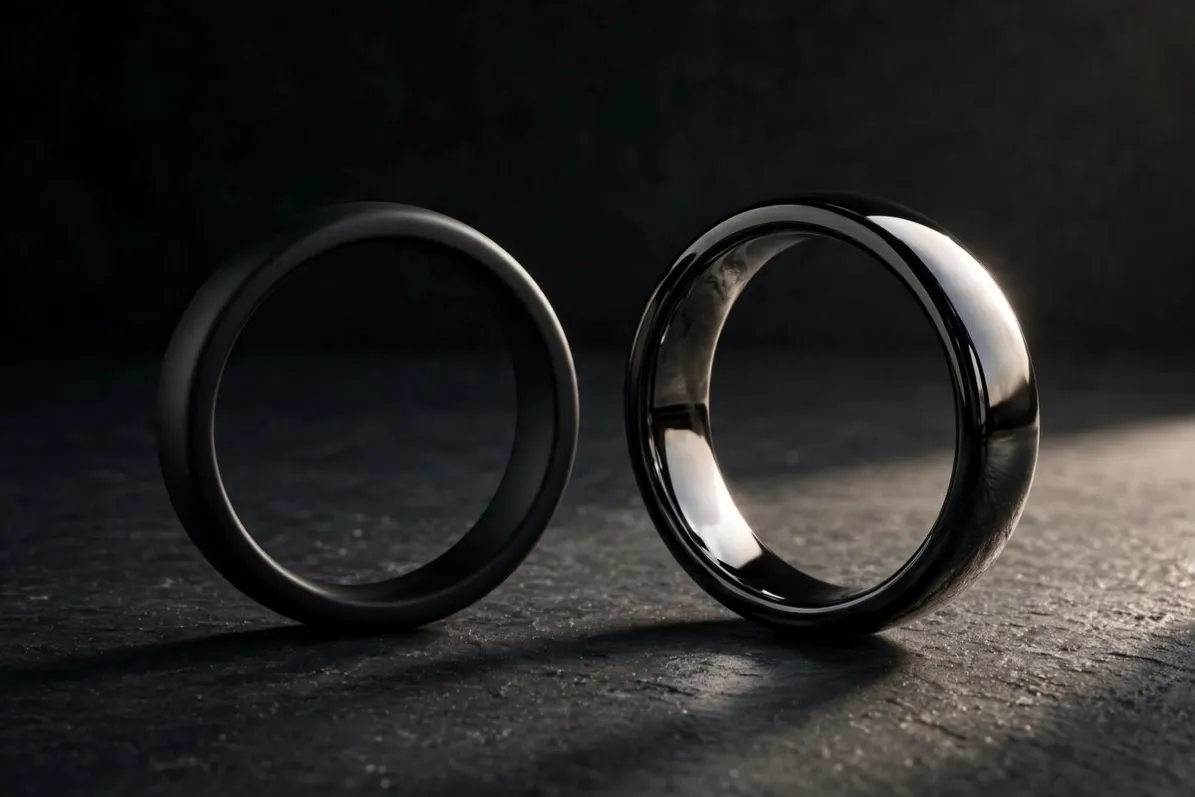
Black Zirconium Rings: A Complete Material Guide for Jewellery Brands
Quick answer: Black zirconium is a ring metal made by machining zirconium — a nickel-free, titanium-family metal — and then heat-treating the finished ring so its surface converts into a hard black zirconium-oxide layer. The black is the material itself, not paint or plating, which is why it does not peel, flake or fade; the one honest limit is that a deep gouge can cut through the oxide and show the silvery metal beneath. Rings cannot be resized, so brands sell them with size-exchange policies. This guide covers what the material is, how it is made, how it wears, how it compares, how to care for it, and which designs it suits. For the decision version, see Pros and Cons of Black Zirconium Rings.
Black zirconium is the dark ring metal whose colour comes from the material itself — a controlled, high-temperature oxidation of the surface — not from paint or plating. The result is a deep black that does not fade, on a tough, skin-friendly metal, which is why more brands now build their black collections on it. This guide answers the questions buyers and brands actually ask, in the order they ask them.
In this guide:
- What is black zirconium?
- How black zirconium rings are made
- Does the black colour fade or wear off?
- Can black zirconium rings be resized?
- Properties at a glance
- How it compares with tungsten and black titanium
- Care and cleaning
- What designs work in black zirconium?
- Frequently asked questions
1. What Is Black Zirconium?
Zirconium is a silvery-grey metal in the same chemical family as titanium — nickel-free, biocompatible, and highly corrosion-resistant. In raw form it is light grey, like other contemporary ring metals. "Black zirconium" is what the metal becomes after oxidation: heat converts the surface into zirconium dioxide, a hard ceramic-family oxide that is naturally black.
Two confusions are worth clearing at the start, because customers raise both:
- Not a coating. The black is a conversion of the ring's own surface, grown from the metal — there is no deposited film, and nothing to peel.
- Not cubic zirconia. Cubic zirconia is a crystalline gemstone used as a diamond simulant; black zirconium is a metal. They share an element in their names and nothing else — a distinction product pages should make once, clearly (it is the single most common naming confusion in this category).
Working jewellers discussing black alternative metals in trade forums describe the finish the same way this guide does: effectively permanent in normal wear, with the deep-scratch limit stated plainly.
2. How Black Zirconium Rings Are Made
The sequence matters, because oxidation is the last step, not the first:
- Machining. The ring is cut and shaped from zirconium stock to the design — profile, width, comfort fit, inlay channels, engraving preparation.
- Finishing before colour. Matte, brushed and polished surfaces are completed while the metal is still grey; the finish a design will wear is decided here, because oxidation preserves it.
- Oxidation. The finished ring is heat-treated; the surface reacts and converts to the black zirconium-dioxide layer.
- Post-oxidation work. Engraving and bright-cut details are worked after oxidation where the design wants them — cutting through the black reveals the bright metal beneath, the material's signature two-tone effect.
This order explains two practical facts: designs are fully engineered before colour exists (so sampling and approval follow the normal program), and engraving contrast is a manufacturing feature, not an aftermarket trick.
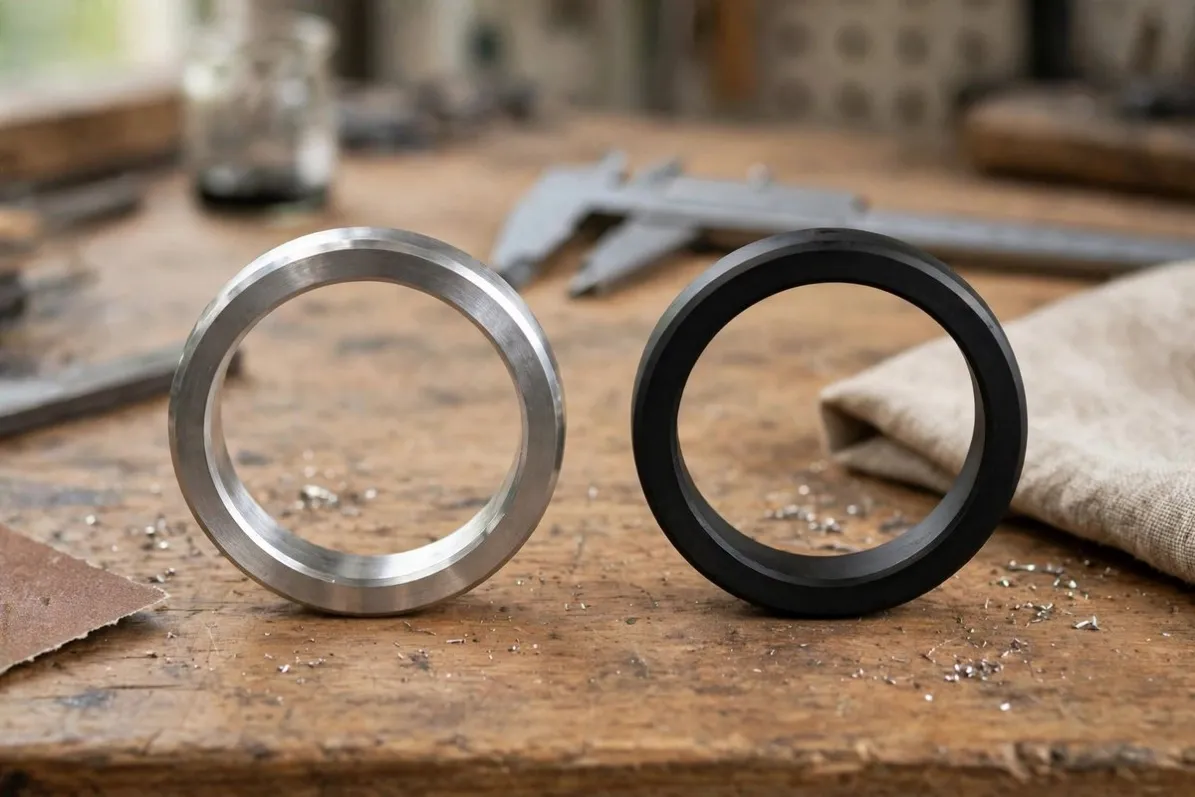
3. Does the Black Colour Fade or Wear Off?
No — not in the way coatings fail. Because the colour is an oxide layer grown from the metal, it does not peel, flake or fade the way black plating does. Sunlight, water, soap and sweat do not touch it.
The honest limit, stated the way brands should state it to customers: a deep scratch or gouge can expose the natural silvery-grey metal underneath. Everyday surface marks tend to blend into matte and brushed finishes; a hard drag across concrete or stone is a different event. The correct product-page sentence is the one good brands already use: the black is real, and no metal is scratch-proof. (The full decision list, pro and con: Pros and Cons of Black Zirconium Rings.)
4. Can Black Zirconium Rings Be Resized?
No. Like titanium and tungsten, black zirconium rings are machined, and material cannot be added or removed invisibly; the oxidation step makes local rework impractical as well. (The same rule holds across the contemporary metals, tantalum included: none of them is resized; all of them run on size exchange.)
The standard brand answer is a size-exchange policy, stated on product pages up front, because buyers consistently raise non-resizable concerns before purchase. Practical corollaries brands should build in: confirm sizes with a sizer before shipping online orders, and word the exchange policy as a service feature (" sized carefully, exchanged simply") rather than a warning.
5. Properties at a Glance
| Property | Black zirconium |
|---|---|
| Colour source | Oxide layer grown from the metal itself |
| Colour range | Black only |
| Surface character | Hard ceramic-family oxide (zirconium dioxide) |
| Skin compatibility | Nickel-free, biocompatible, titanium family |
| Weight class | Moderate — heavier than titanium, far lighter than tantalum |
| Behaviour under extreme force | Bends; does not shatter |
| Water and chemicals | Unaffected in daily wear |
| Resizing | Not possible — size exchange |
| Refinishing | Re-oxidation by the manufacturer |
| Emergency removal | Possible with standard ring-cutting tools; the hard surface takes more effort than precious metal |
6. How It Compares with Tungsten and Black Titanium
| Black zirconium | Tungsten carbide | Black titanium | |
|---|---|---|---|
| Colour source | Oxide layer — the material itself | Naturally grey-dark metal | Black finish engineered as titanium's own material line |
| Scratch behaviour | High resistance; deep gouges reveal grey | Highest resistance; the risk is cracking instead | High resistance |
| Weight | Moderate | Heavy | Light |
| Crack behaviour | Tough; unlikely to shatter | Can shatter on hard impact | Tough |
| Best for | Premium black collections with a design range | Maximum scratch-resistance briefs | Lightweight black lines |
Community buying discussions land on black zirconium for a recurring combination of reasons — it reads premium, it positions below gold, and it lasts. Brands should note why the combination works: the premium read comes from the finish range and the engraving contrast, and the durability claim customers repeat is the oxide story — which happens to be true.
7. Care and Cleaning
Black zirconium is a low-care material:
- Clean with warm water, mild soap and a soft cloth; dry soft. That is the whole routine.
- No special products are needed, and none should be sold against it — avoid abrasive polishes and hard brushes, which attack finishes rather than help them.
- Store pieces separately from harder materials where practical; the everyday enemies are hard edges and other jewellery, not air or water.
- For damage — a deep gouge or a tired finish — the route is the manufacturer: restoration is re-oxidation, not a bench repolish. Brands should publish that route at purchase so customers are never surprised later.
8. What Designs Work in Black Zirconium?
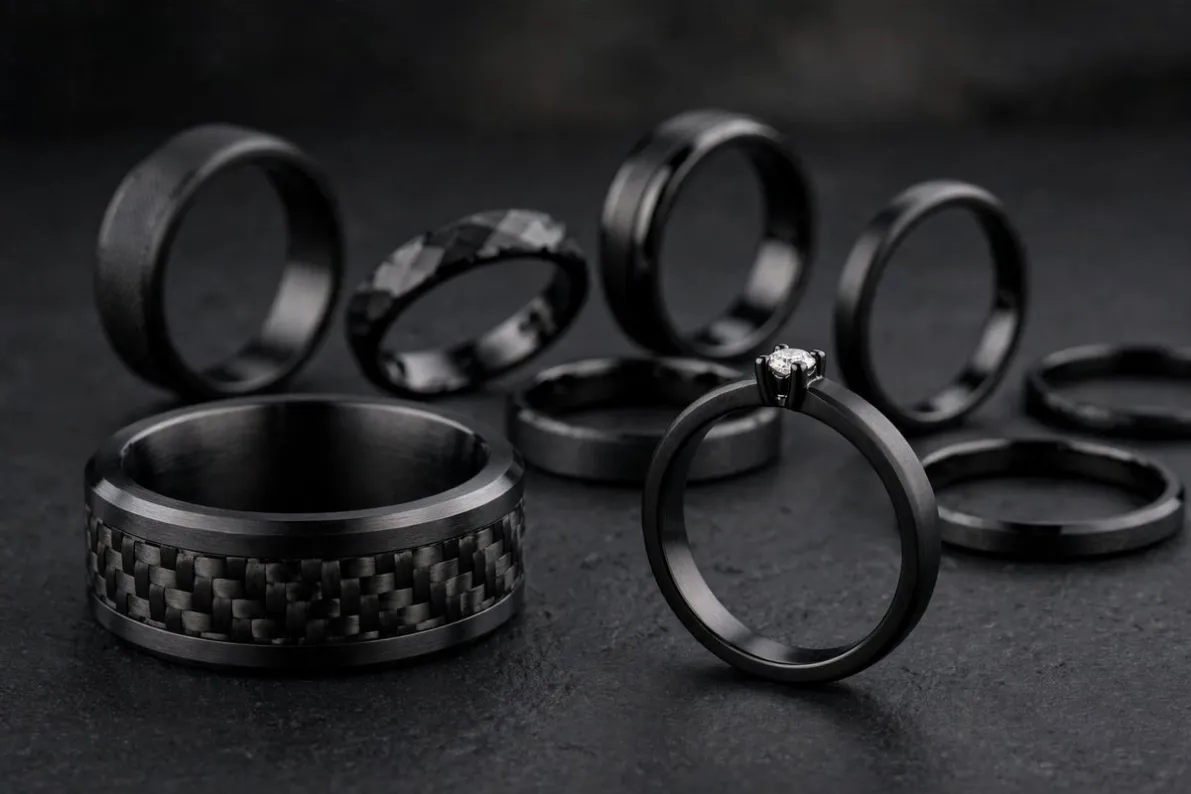
- Matte + polished contrast — bevels, grooves and two-register finishes; the signature look of the material.
- Engraving revealed in bright metal — patterns, text and artwork cut through the oxide, permanent and infill-free.
- Inlays — carbon fibre, wood and metal inlay channels across the black surface, set off by the matte ground.
- Two-tone constructions — contrasting inner bands and liners against the black exterior.
- Men's wedding bands and black engagement-style designs with stone settings — the contemporary black collection's core range.
A black collection built on zirconium lets a brand carry a full black line — core to premium — on one consistent, honest material story: one colour done completely, with the limits published alongside the virtues.
Frequently Asked Questions
What is black zirconium?
It is zirconium — a silvery, nickel-free metal from the titanium family — whose finished ring surface has been converted by heat into a black zirconium-dioxide layer. The metal underneath stays grey; the black is a grown oxide of the surface itself, not a coating, which is why it behaves so differently from plated black rings.
Is black zirconium the same as cubic zirconia?
No. Cubic zirconia is a crystalline gemstone used as a diamond simulant — a stone. Black zirconium is a solid metal ring material. The names share the element zirconium; the materials, uses and properties have nothing in common. The confusion is common enough that clear product pages address it once, directly.
Will a black zirconium ring fade, peel or turn silver?
It will not fade or peel — the colour is an oxide grown from the metal, with no coating to separate. It can show silver-grey only where a deep scratch or gouge cuts through the oxide layer into the metal beneath. Normal surface wear blends into matte and brushed finishes rather than changing the ring's colour.
How do you clean a black zirconium ring?
Warm water, mild soap and a soft cloth, then dry soft — that is the complete routine. No special products are required. Abrasive polishes and hard brushes should be avoided, as they mark finishes. If a ring is deeply gouged or its finish is tired, restoration is re-oxidation by the manufacturer, not repolishing.
Is black zirconium good for a wedding band?
Yes — it is one of the contemporary materials wedding bands are most often built on, because it combines a permanent black finish, toughness (it bends rather than shattering), skin-friendly nickel-free composition and low care. The two things to plan around are sizing — it cannot be resized, so size carefully and rely on exchange policies — and the deep-scratch limit, stated honestly at purchase.
Can a black zirconium ring be cut off in an emergency?
Yes. Like other contemporary metal rings, it can be removed with standard ring-cutting equipment; the hard oxide surface means the cut takes more effort than with a precious-metal band, which emergency guidance accounts for. It should never be a reason to avoid the material — but brands serve customers well by saying so plainly.
Why do brands build whole black collections on one material?
Consistency. One material means one colour story, one care story, one honest limits list, and designs that range from core bands to premium contrast and inlay pieces without the line fragmenting across materials with different behaviours. Customers learn the material once and can buy across the whole collection with the same expectations.
About FKS Jewelry
FKS Jewelry is a custom ring manufacturer in Dongguan, China, making rings to the designs of jewellery brands, wedding-ring companies, wholesalers and product developers. FKS manufactures black zirconium rings with in-house oxidation and finishing — matte/polished contrasts, revealed-metal engraving, inlays and stone-set designs — within its finished OEM ring program across nine materials: stainless steel, titanium, black titanium, tantalum, black zirconium, cobalt, Damascus steel and carbon fibre for finished rings, plus brass for display samples. Programs start from a CAD file, a technical drawing, a product photo or a physical sample, with sample approval before batch production and work carried out under NDA.
Bring your black collection brief, and discuss a black zirconium program with our engineering team.
Related reading: