How Long Does Plating Last on Display Rings? Care and Maintenance
Plated display rings live gently compared with worn rings: dry-cloth care, separated storage and scheduled audits keep a finish for years. The full routine.
How Long Does Plating Last on Display Rings? Care and Maintenance
Quick answer: A plated display ring that is handled and stored properly holds its gold-tone finish for years — display wear is far gentler than wear on a finger, because there is no constant abrasion, impact or skin chemistry. What actually ends a display finish early is not time but practice: oils left unwiped, abrasive cloths and chemical cleaners, pieces rubbing in storage, and sulphur-bearing tray materials. The care system is simple — dry microfiber, no chemicals, no soaking, no ultrasonic, separated storage, and a scheduled audit that sends drifted pieces for re-polishing and re-plating before the case starts to look inconsistent.
A plated display ring is a working object: picked up, tried on, wiped down, lit daily. Its gold-tone finish is made for exactly that life — but like any surface, it ages. The practical questions are how long a display finish lasts, what wears it faster, and how to keep a case looking new for years. This guide answers all three: the wear factors, the cleaning routine, the care calendar, the storage rules, and the point at which a piece should be refurbished or replaced.
In this guide:
- What shortens a display ring's finish life?
- How should staff clean plated display rings?
- The care calendar: daily, monthly, quarterly, annual
- Storage rules that prevent most wear
- Refurbish or replace? The decision
- Does wear affect the match to the real collection?
- Frequently asked questions
1. What Shortens a Display Ring's Finish Life?
Display wear is different from wear on a finger — and mostly gentler. The four real enemies are handling residue, cleaning damage, storage friction and environment:
- Handling oils and hand cream — hundreds of fingertips leave films that dull the surface, and the creams customers wear transfer during try-ons. Left unwiped, the film is what most people first notice as "the dummy looks tired."
- Wiping and cleaning damage — abrasive cloths, paper tissue and harsh chemicals create micro-scratches and attack the plating itself. More display finishes are killed by cleaning than by display.
- Case friction — pieces sliding on trays and knocking against each other wear edges and high points first.
- Environment — humidity and dust, the heat and UV of a sunlit window, and air-borne sulphur (including from some rubber and foam tray materials) all push a bright surface toward tarnish.
What display rings rarely face: the constant abrasion, impacts and skin chemistry a worn ring takes every day. That asymmetry is why a display piece worked properly holds its finish for years while a worn ring's plating lives a much harder life.
2. How Should Staff Clean Plated Display Rings?
The routine is deliberately boring — boring is what protects plating:
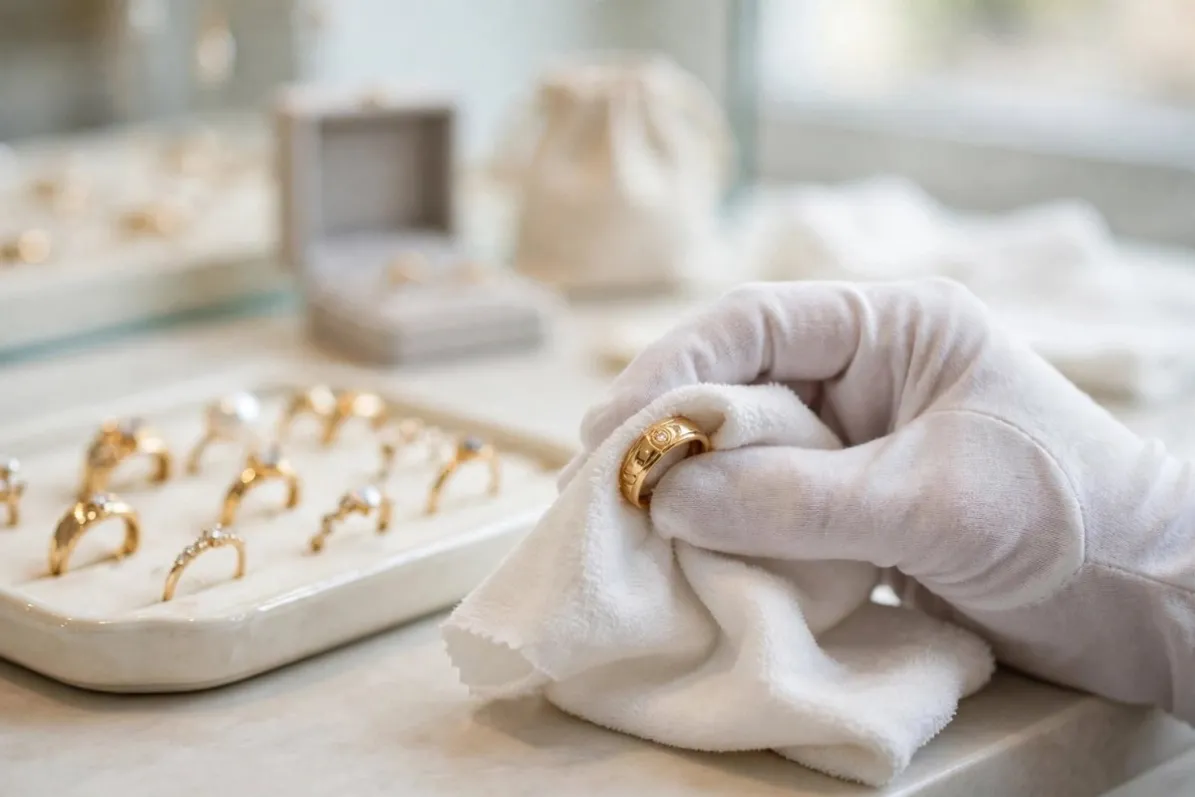
- Dry microfiber first. A soft, clean, dry cloth removes oils and fingerprints. This is the overwhelming majority of care — thirty seconds per handled piece at the end of the day.
- Damp, never wet, never soaked. For a stubborn mark, a slightly damp cloth, then dry immediately. Plated pieces are never soaked, and stone-set pieces are never left sitting in water.
- No chemicals. Jewellery dips, ammonia, alcohol-based cleaners and household sprays attack plating and can cloud stones. Skip them entirely — there is no display mark that needs them.
- No ultrasonic, no steam. Vibration can work stone settings loose, and both methods are harsher than anything a wipe cannot do. Keep dummies out of the workshop cleaning machines customers' real rings go through.
- A soft brush for settings only. Around stones and engraving, a dry, very soft brush lifts dust from recesses without touching the surface with force.
3. The Care Calendar: Daily, Monthly, Quarterly, Annual
Care works when it is scheduled, not remembered. A display program runs on four rhythms:
| Rhythm | Task |
|---|---|
| Daily | Dry-wipe every piece that was handled or tried on; return pieces to their slots or pouches |
| Monthly | Close inspection under case lighting: fingerprints missed, early dulling, loose stones, pieces that no longer sit right |
| Quarterly | Tone check: compare suspect pieces against the real collection (or the retained approved sample) for drift, as one set, under the same light |
| Annually | Full audit — the pick-up test on every piece: hand-feel, tone against the collection, stone security, finish wear at edges and high points; route failures to refurbish or replace |
The audit half of this calendar is the same discipline used to catch a fading case before customers do (see When a Low-Fidelity Dummy Costs You the Sale); the daily half is what makes the quarterly verdict usually "all fine."
4. Storage Rules That Prevent Most Wear
Most finish wear happens off the floor, in the tray and the drawer. Storage is where a program quietly wins or loses years of finish life:
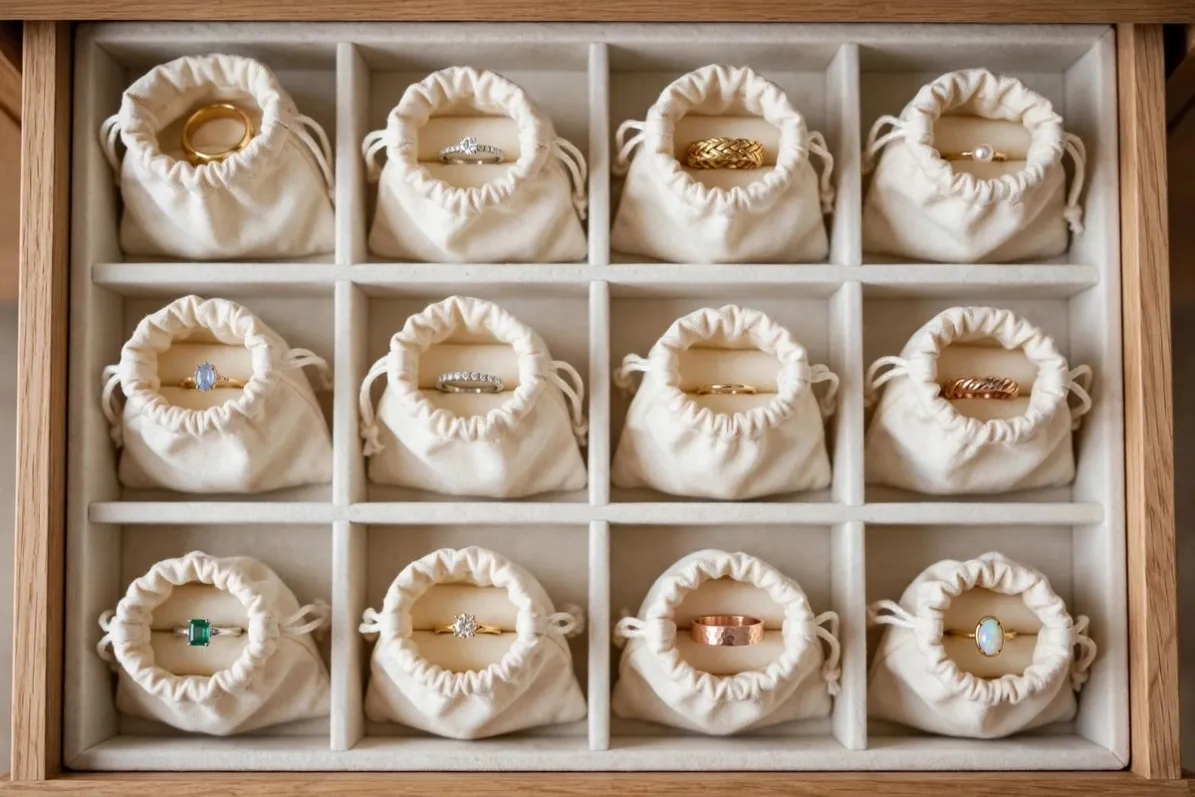
- Individual pouches or fitted slots. Pieces stored separated cannot rub. A dummy stored loose against its neighbours is being sanded, slowly, every time the tray moves.
- Choose tray materials carefully. Soft, inert linings only; some rubber and foam compounds release sulphur that tarnishes plated surfaces in an enclosed drawer. If a stored set tarnishes faster than the displayed set, suspect the tray before the plating.
- Dry and covered. Drawers and cases closed against dust and humidity; window pieces rotated, because sunlight and heat age the pieces in the glass first.
- Handle by the edges, or gloved, during audits. The quarterly inspection should not deposit the fingerprints the daily wipe then has to remove.
5. Refurbish or Replace? The Decision
A piece that fails an audit check has two routes, and brass construction keeps both open:
| Condition found | Route |
|---|---|
| Dulling, film, early tone drift — surface only | Clean, then re-polish and re-plate to the retained sample if the drift does not wipe away |
| Finish worn at edges and high points | Re-polish and re-plate — the surface is restored, the body and setting are sound |
| Brand has refreshed its tone standard | Re-match program-wide at sample stage, then re-plate through the sets (see Matching Your Gold Colours) |
| Physical damage — bent, dented, setting worn or stones loose beyond tightening | Replace from the program; refurbishment restores surfaces, not structure |
| Refurbishment no longer makes sense for that unit | Replace, and keep the retired piece as a handling spare for staff training |
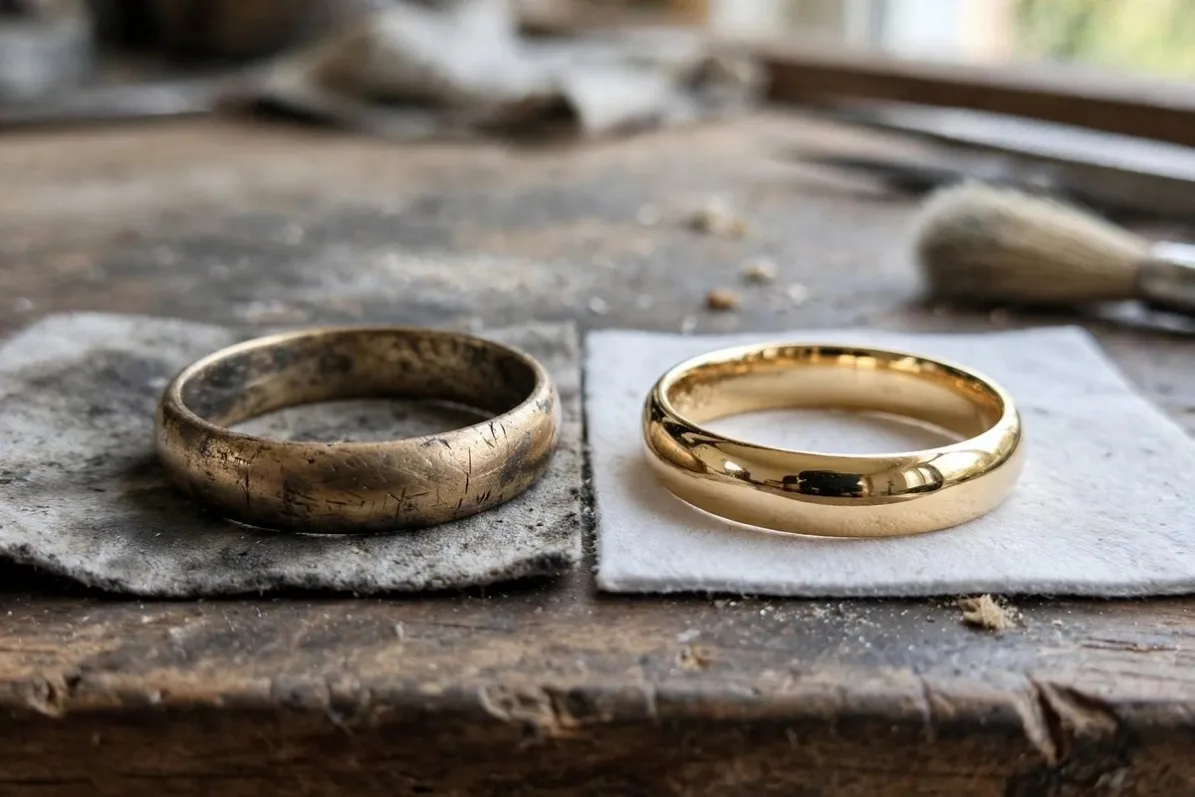
Because both routes exist, display programs are planned as rotatable stock, not one-time purchases: heroes and heavily handled pieces rotate and refurbish on a cycle, quieter pieces run for years untouched, and the case as a whole never has a "bad year." Ask about refurbishing before ordering — it is part of the economics of the program (planned at mapping stage: From Your Collection to the Showroom).
6. Does Wear Affect the Match to the Real Collection?
Yes — and this is the real reason maintenance matters. Colour matching is approved against a standard, and wear moves a dummy away from that standard.
A worn dummy drifts: a little paler where edges rubbed, a little duller where films built up, until the case starts reading inconsistent next to the real collection it mirrors. Nobody notices one piece drifting; everybody notices a case that no longer agrees with itself. Keeping dummies at standard is what keeps the match exact — and the match, as the colour guide argues, is the entire point of the program.
The defence is the retained approved sample: drift is judged against a physical standard under the same light, not against anyone's memory of how the set looked when it arrived.
Frequently Asked Questions
How long does the plating on a display ring actually last?
With proper handling and storage, years. Display life is far gentler than life on a finger — no constant abrasion, impacts or skin chemistry — so the finish's real enemies are practice, not time: unwiped oils, abrasive or chemical cleaning, pieces rubbing in storage, and tarnishing environments. Programs that run the simple care routine keep sets at standard for years, refurbishing individual pieces as they drift.
Can you clean plated display rings with jewellery dip or an ultrasonic cleaner?
No. Chemical dips, ammonia and alcohol-based cleaners attack plating and can cloud stones, and ultrasonic vibration can work stone settings loose. Plated display rings are cleaned with a soft dry microfiber cloth — damp at most, dried immediately — and a dry soft brush around settings. Nothing a display piece collects needs harsher treatment.
Why is my display ring going dull or dark?
Usually one of four causes: handling oils and hand-cream films left unwiped (dulling), abrasive cloths or tissues used for wiping (micro-scratches that scatter light), pieces stored in contact with each other (friction wear), or a tarnishing storage environment — humidity, sulphur-bearing rubber or foam trays, or a hot sunlit window. Work through the causes in that order; the first two explain most cases.
Should staff wear gloves to handle display rings?
For audits and set handling, yes — gloves or holding pieces by their edges keeps the inspection from depositing the fingerprints the daily routine then removes. For normal counter work, what matters more is the end-of-day dry wipe of every handled piece and returning it to its own slot or pouch.
How often should a display set be audited?
On a four-part rhythm: daily wiping of handled pieces, a monthly close inspection, a quarterly tone check of suspect pieces against the real collection or the retained sample, and a full annual audit of every piece — hand-feel, tone, stone security and finish wear — with failures routed to re-plating or replacement.
Can a worn or tarnished display dummy be restored?
Generally yes. Brass bodies accept re-polishing and re-plating, so a piece whose finish has dulled, drifted or worn at the edges is restored to the retained approved sample and returned to the case. Pieces with structural damage — bent or dented bodies, worn settings — are replaced instead, because refurbishment restores surfaces, not structure.
Does sunlight damage display ring plating?
A sunlit window is the harshest seat in the store: heat, UV and daily temperature swings age a finish faster than a shaded case, and window pieces visibly drift first. Rotate window pieces with case pieces on the audit cycle, and give the window set the quarterly tone check without exception.
About FKS Jewelry
FKS Jewelry is a custom ring manufacturer in Dongguan, China, making rings to the designs of jewellery brands, wedding-ring companies, wholesalers and product developers. FKS manufactures brass display ring dummies for gold and platinum jewellery brands — stone-set, micro-engraved, and finished in gold-tone, rose gold-tone and white gold-tone plating. Brass bodies accept re-polishing and re-plating, and standing programs are planned as rotatable stock with refurbishment built in — alongside finished OEM rings in stainless steel, titanium, black titanium, tantalum, black zirconium, cobalt, Damascus steel and carbon fibre. Programs are built from a CAD file, a technical drawing, a product photo or a physical sample, with sample approval before batch production and work carried out under NDA.
Discuss a display program with refurbishment built in — talk to our engineering team.
Related reading:
- Matching Your Gold Colours: Gold-Tone, Rose Gold-Tone and White Gold-Tone Display Rings
- When a Low-Fidelity Dummy Costs You the Sale
- Display Ring Dummies for Gold & Platinum Brands: A Spec Guide
- From Your Collection to the Showroom: How Designs Become Display Dummies
- Brass rings and display samples — FKS Jewelry products
- Why stores display dummy rings instead of real stock